
Design vs. Development: Bridging the Great Divide

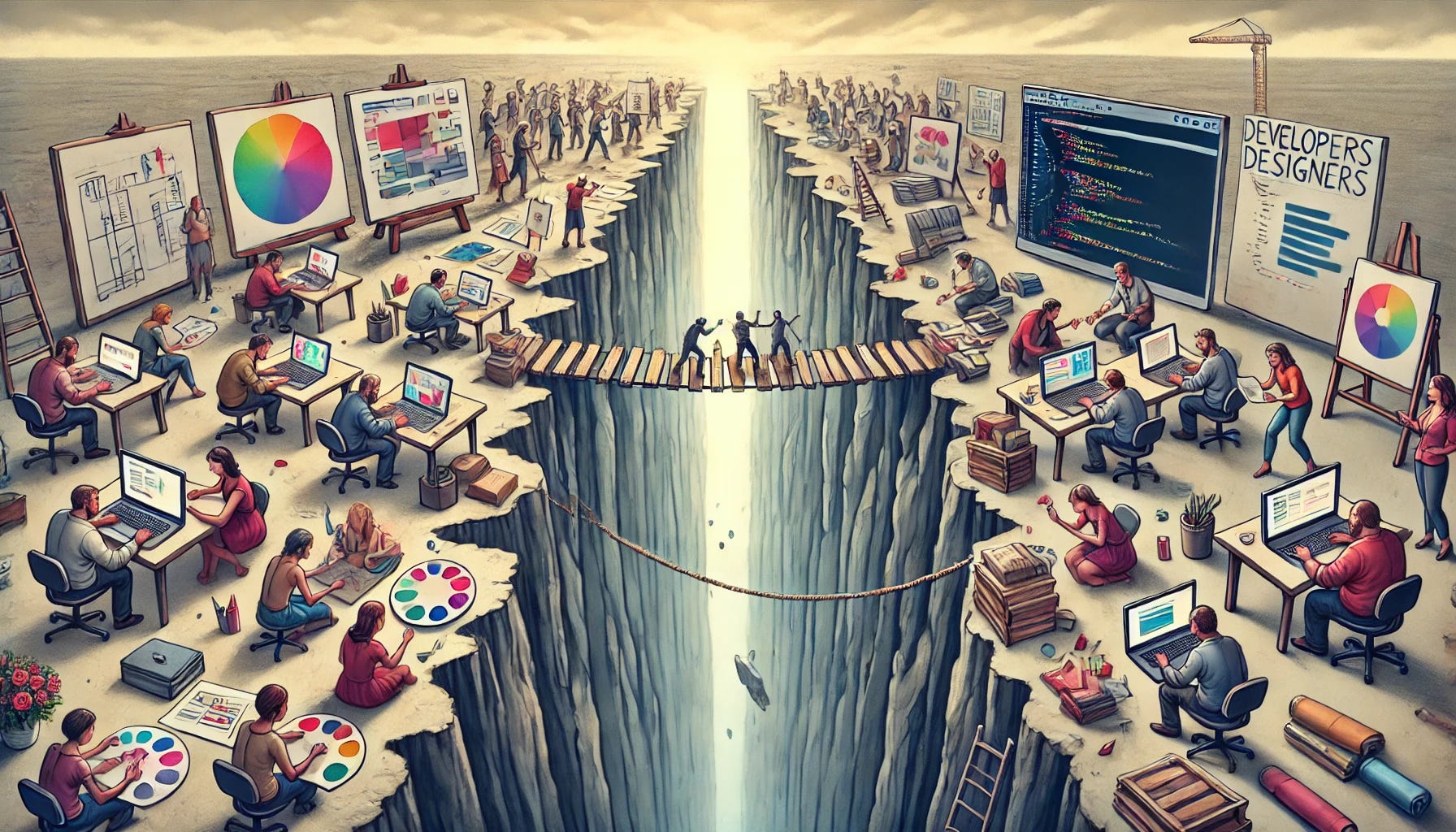
If you’ve spent any time in tech, you know the tension between designers and developers is as old as the internet. It’s not a feud, per se—more like a sibling rivalry where both sides think they’re the smartest in the room. I know how frustrating it was to help the last born in my family solve his math assignments and his constant whining at every solution I provide: “That’s not how my teacher said I should solve it oh!“, like “Arghhhhh!!!”. Designers say developers ruin their vision. Developers say designers have no idea how code works. But everyone agrees that the client’s last-minute feedback is the real villain.
So, what’s the deal? Why do these two essential roles sometimes feel like they’re speaking entirely different languages? It sometimes feels like the Tower of Babel all over again. And more importantly, how can we get them to play nice? Let’s talk about it.
The Core of the Conflict
At its heart, the designer-developer divide boils down to priorities:
Designers: Their job is to make things beautiful, functional, and intuitive. They care about user experience, visual hierarchy, and the emotional impact of colour palettes. A poorly aligned button? Sacrilege, Abomination, Desecration.
Developers: Their job is to make things work. They care about clean code, performance, and maintainability. A complex animation that tanks load times? A cause for Nightmares.
These priorities don’t always align. For example, a designer’s obsession with pixel-perfect layouts might clash with a developer’s need for scalable, responsive code. Add tight deadlines and vague client requirements into the mix, and you’ve got a recipe for friction and conflict.
Miscommunication Nation
The language barrier is real and I don’t mean Hausa Designers communicating with Isoko Developers. When a designer says, “Let’s add some whitespace here,” the developer might hear, “Let’s waste precious screen real estate.” When a developer says, “This component needs refactoring,” the designer might hear, “I’m going to destroy your masterpiece.” I have been in this situation. It’s never pretty.
Part of the problem is that designers and developers use different tools, processes, and metrics for success. Designers live in Figma, Adobe XD, or Sketch, while developers live in VS Code, GitHub, and browser dev tools. Bridging this gap requires effort—and a little empathy. Which both parties rarely possess.
Building a Better Workflow
So, how do we go from sibling rivalry to dynamic duo? Here are a few tips:
Collaborate Early and Often: Bring designers and developers into the conversation from the start. Early input from both sides can prevent headaches down the line.
Speak Each Other’s Language: Designers don’t need to learn JavaScript, and developers don’t need to master typography. But a little cross-education can go a long way. Developers who understand design principles and designers who grasp basic coding constraints are better equipped to find common ground.
Use Shared Tools: Tools like Zeplin, Figma’s developer handoff features, or Storybook can help bridge the gap by making it easier to translate designs into code.
Document Everything: Clear documentation can save everyone’s sanity and prevent “World War Tech”. Whether it’s a design system, a component library, or a style guide, having a single source of truth and Knowledgebase minimizes misunderstandings.
Focus on the User: At the end of the day, both designers and developers are working toward the same goal: a great user experience. Keeping the user at the centre of the conversation can help defuse turf wars.
Success Stories
Believe it or not, plenty of teams have found harmony between design and development. Take Airbnb, for example. Their design team worked with developers to create a comprehensive design system, making it easier to build consistent, user-friendly interfaces. The result? Faster development cycles and fewer arguments over button styles.
Or consider tools like Google Material Design and Apple’s Human Interface Guidelines, which offer frameworks for aligning design and development. These systems aren’t perfect, but they show what’s possible when both sides work together. “TEAMWORK MAKE THE DREAM WORK!”. Why did that sound cringy?
The Big Picture
The tension between designers and developers isn’t going away—and that’s okay. A little friction can be healthy, pushing both sides to do their best work. The key is to channel that energy into collaboration rather than conflict.
So, let’s stop bickering and pointing fingers and start building bridges. Because when designers and developers join forces, a masterpiece is created. And let’s be honest: the client’s going to change everything at the last minute anyway.